Disorder and defects in topological systems
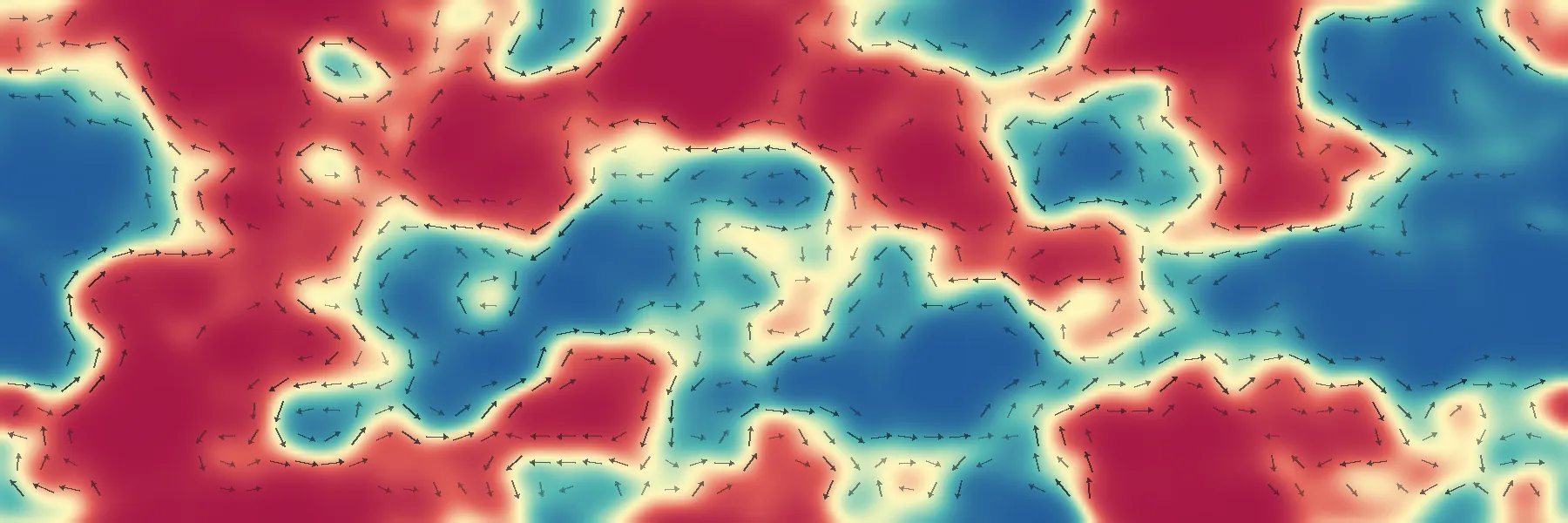
A missing atom or a disordered bond can trap an electronic state, connect conducting paths, or change how a crystal responds to an electric field. We study which of these effects are enforced by topology, and how local wavefunctions reveal them when translation symmetry is lost.
Distant defects control slow transport
Quantum Critical Dynamics Induced by Topological Zero Modes
Physical Review Letters 136, 136602 (2026).
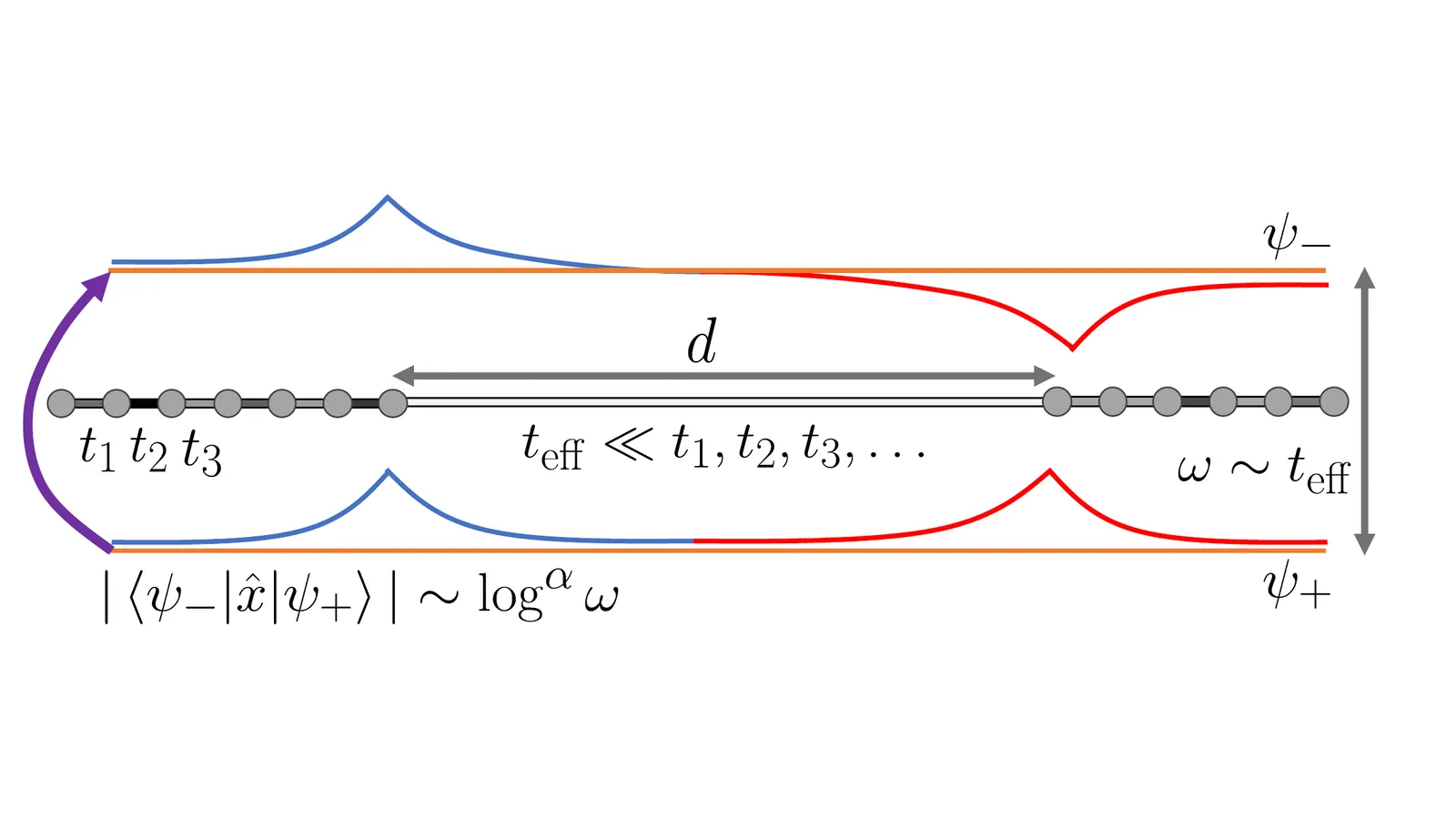
Two domain-wall states can exchange charge even when they lie far apart. Ilia, Tobias Holder, and Raquel show that these weakly coupled pairs control low-frequency transport in a disordered Su–Schrieffer–Heeger chain. At the topological transition, their unusual spatial decay produces a logarithmic frequency dependence of the ac conductivity.
An impurity exposes a topological obstruction
Ring States in Topological Materials
Newton (in press).
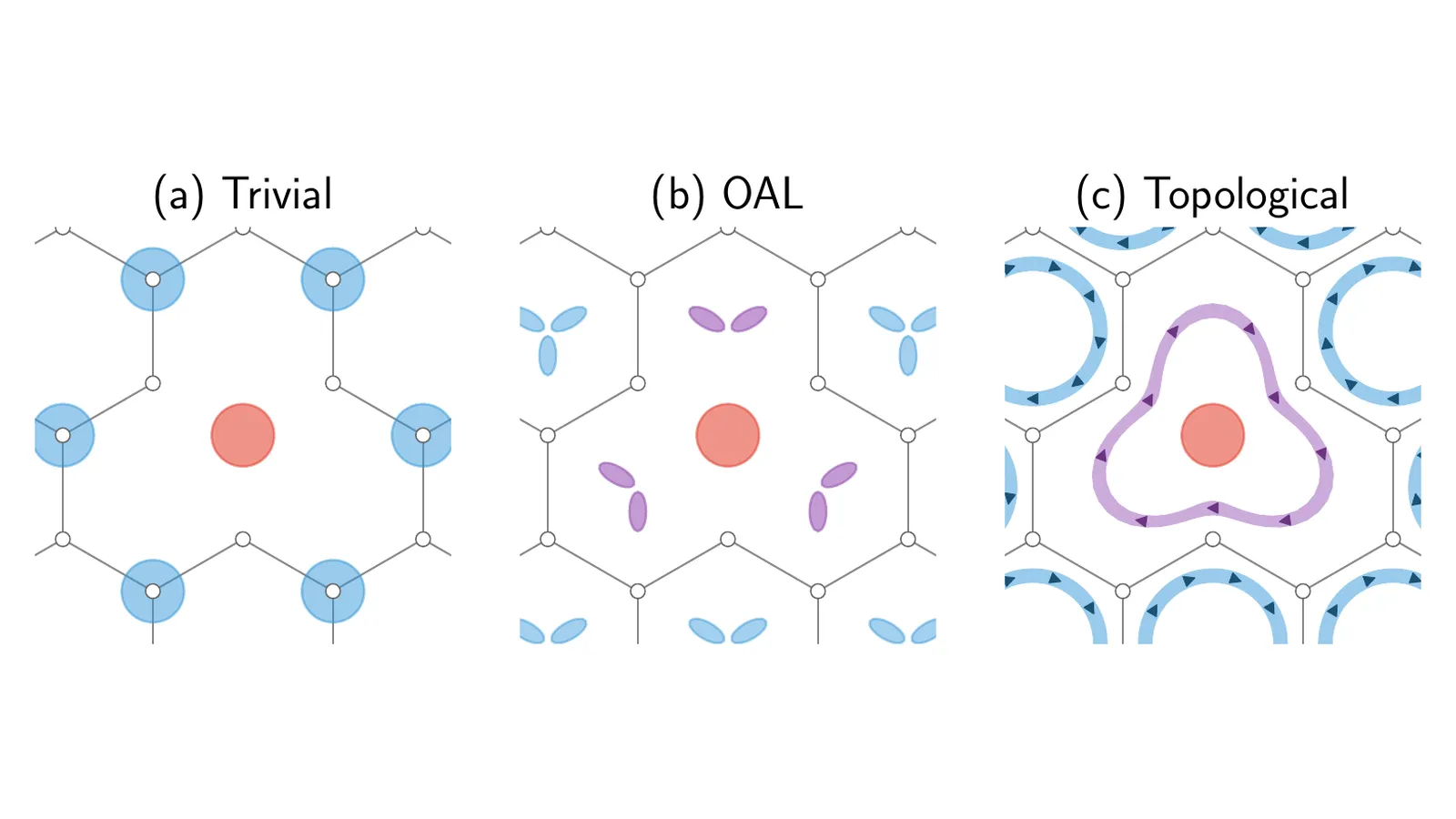
A strong impurity can push an electronic state away from its own site and leave a ring of weight around it. With Roni Ilan, Zhi-Da Song, Andrei Bernevig, and Ady Stern, we connect these states to zeros of the impurity-projected Green function. Their energies become insensitive to impurity strength, and joining the states reconstructs an edge or surface mode.
Topologically protected flatness in chiral moiré heterostructures
Physical Review X 15, 021056 (2025).
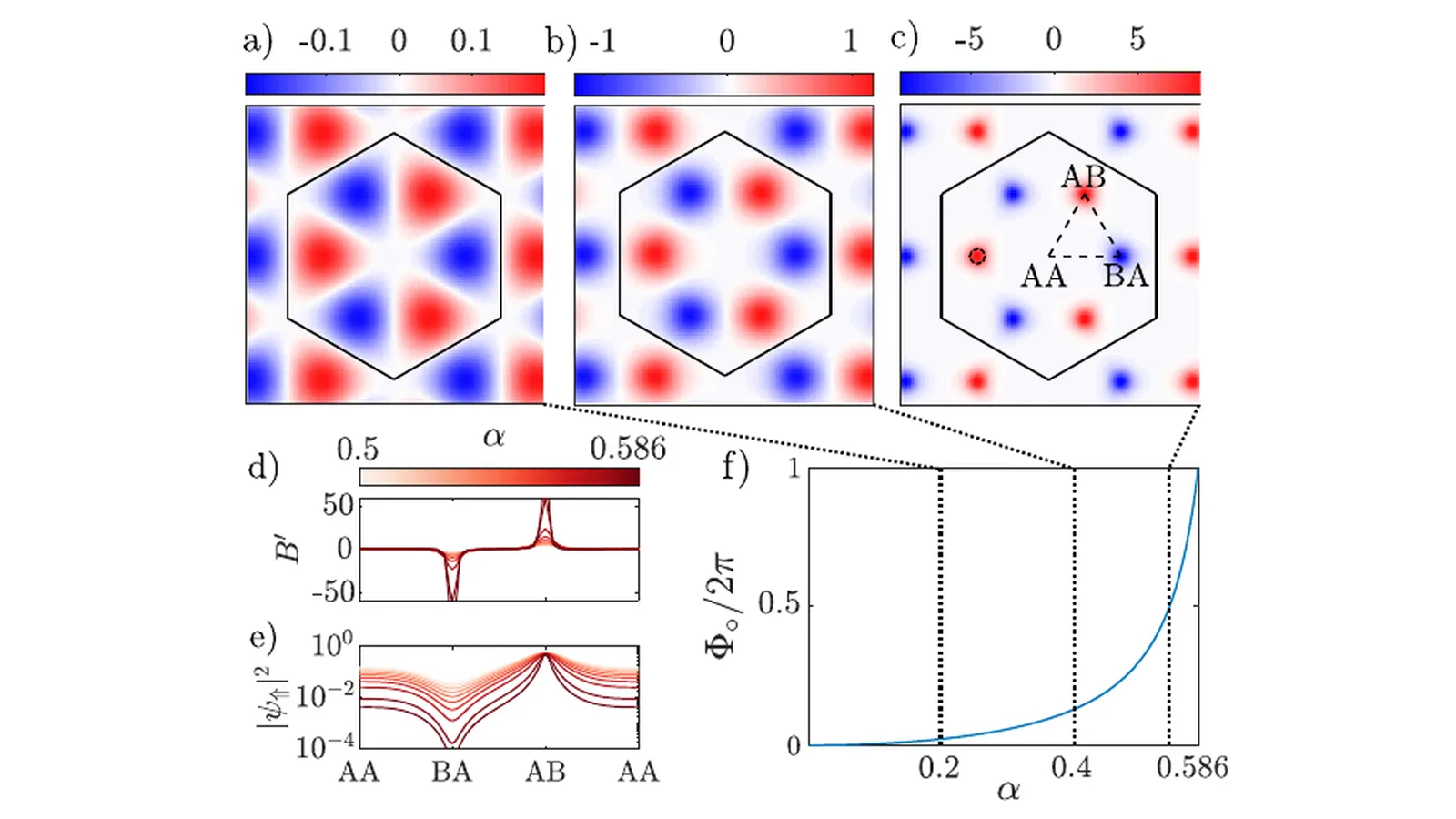
With Valentin Crépel and Nicolas Regnault, we explain why the first magic-angle flat bands tolerate certain lattice imperfections much better than higher magic-angle bands. In the chiral limit, an effective magnetic-field description relates their flatness to a topological index theorem. The resulting suppression of disorder broadening is strongest at the first magic angle and persists beyond the exact chiral limit.
A metal protected by symmetry on average
Anderson critical metal phase in trivial states protected by average magnetic crystalline symmetry
Nature Communications 15, 3069 (2024).
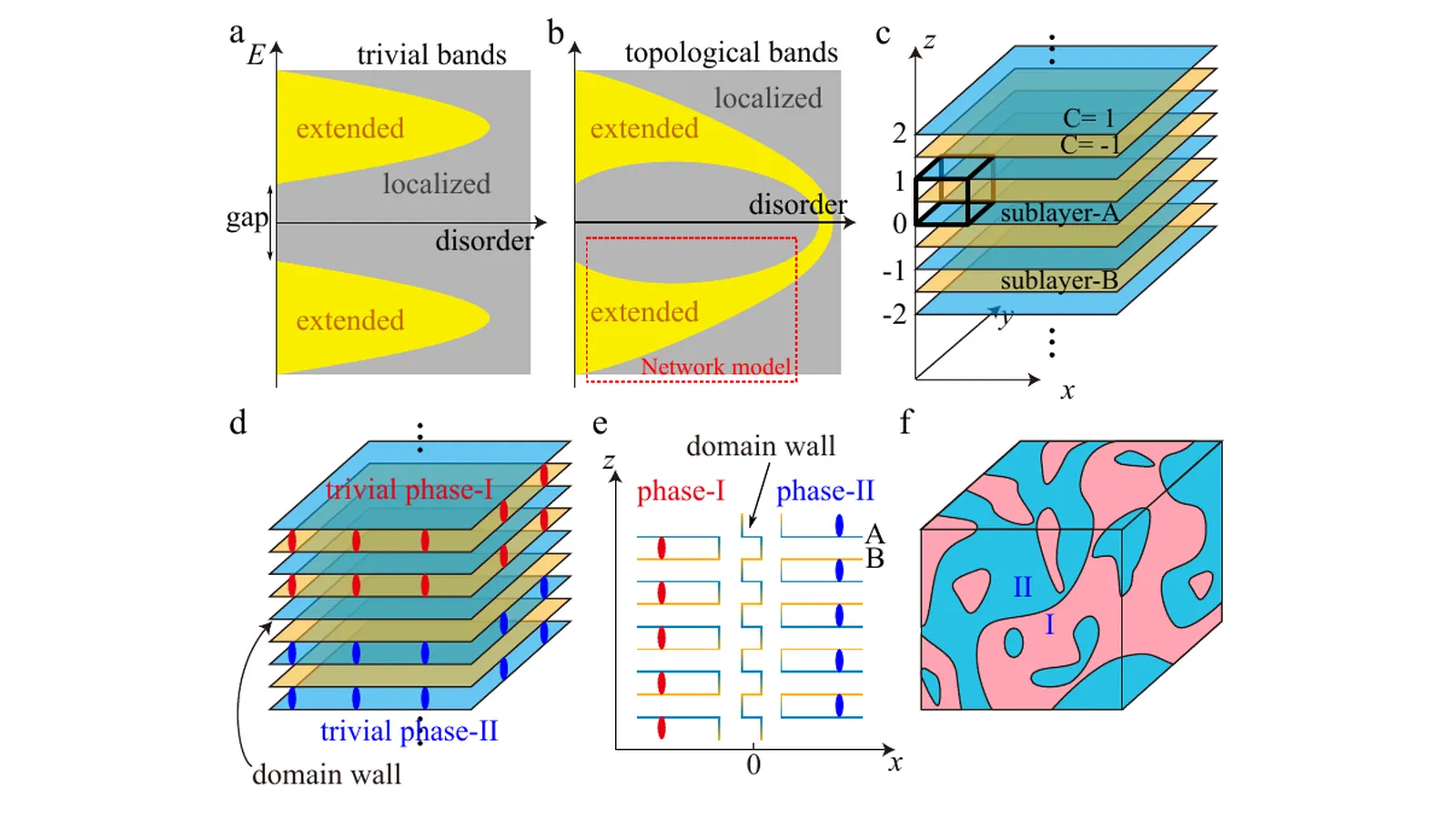
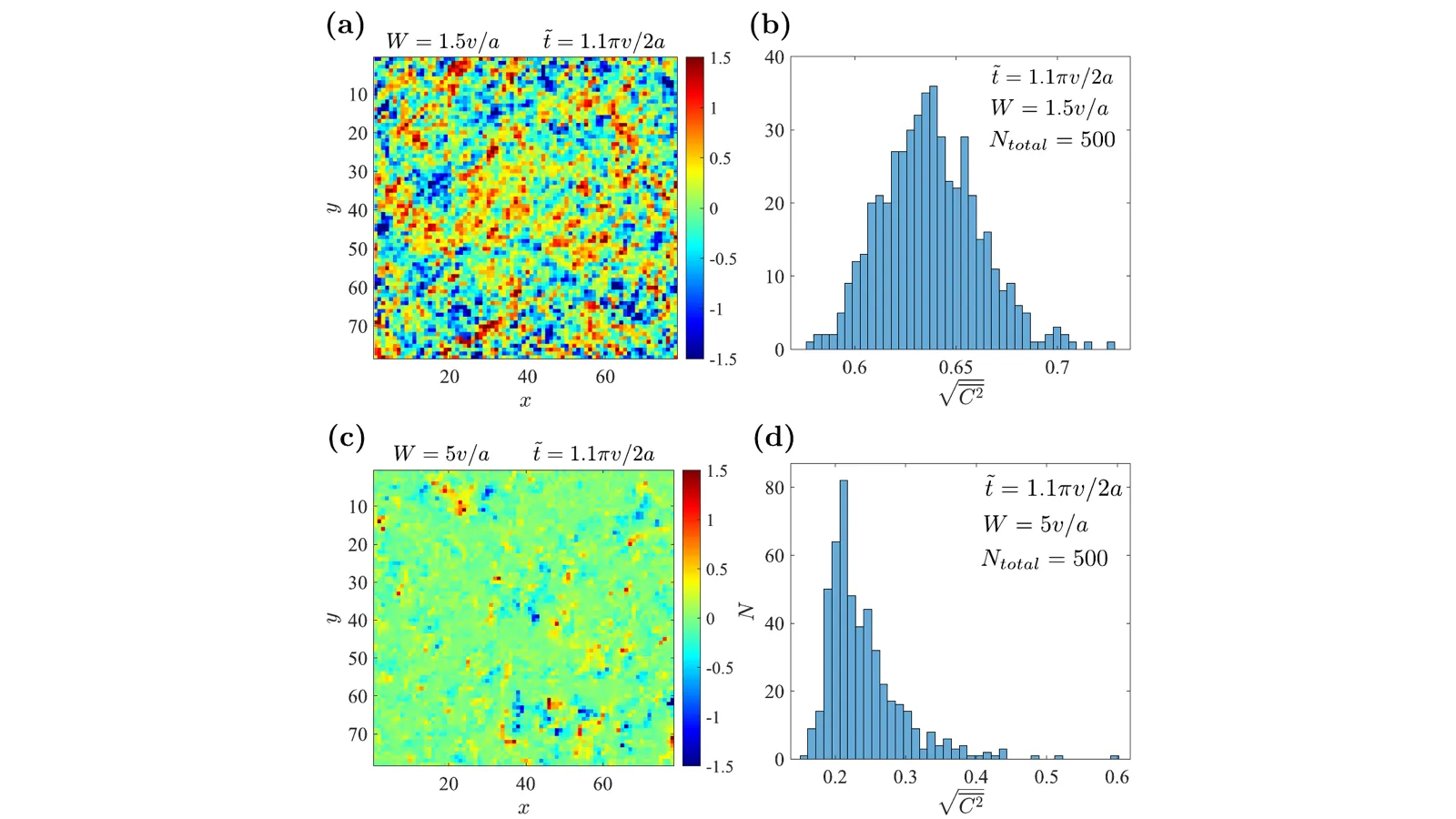
A disordered sample can break a crystal symmetry locally while preserving it statistically. With Zhi-Da Song and collaborators, we show that such average symmetries can stabilize a scale-invariant metal between obstructed atomic insulators. Mapping the electronic problem to a network of conducting paths explains the phase through percolation.
The boundary is part of the classification
Boundary-obstructed topological phases
Physical Review Research 3, 013239 (2021).
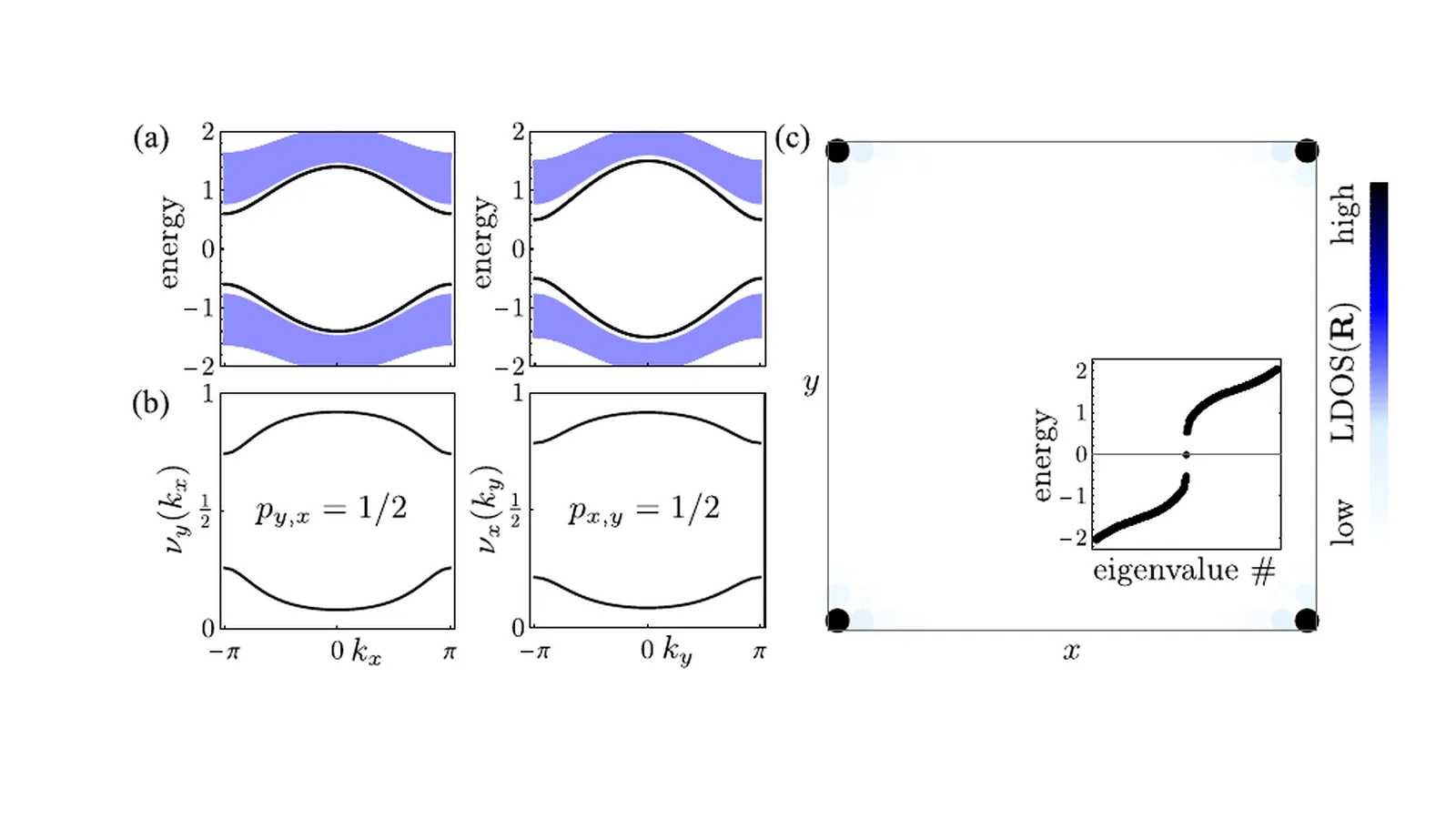
Two insulators that can be smoothly connected in a periodic crystal may remain distinct when the sample has a fixed boundary. With Eslam Khalaf, Wladimir Benalcazar, and Taylor Hughes, we identify this boundary obstruction and relate it to how electronic orbitals meet the termination. Its signatures include surface states and fractional corner charges, protected as long as the relevant boundary gap stays open.
Delocalization Transition of a Disordered Axion Insulator
Physical Review Letters 127, 016602 (2021).
In a three-dimensional axion insulator, inversion symmetry preserved on average prevents a direct transition to a trivial localized insulator. We show that a delocalized metallic phase must intervene, and connect this transition to percolation and a quantum network model. The mechanism survives weak breaking of average inversion symmetry.