Moiré materials and correlations
Rotating one atomic layer relative to another creates a long-period pattern that can slow electrons until their interactions dominate. We study how the resulting wavefunctions select fractional phases, magnetism, and collective order. Local-orbital models and continuum theory connect that microscopic structure to optical and transport measurements.
Local orbitals organize the interactions
Cell Natural Orbitals in Interacting Topological Bands
arXiv (2026).
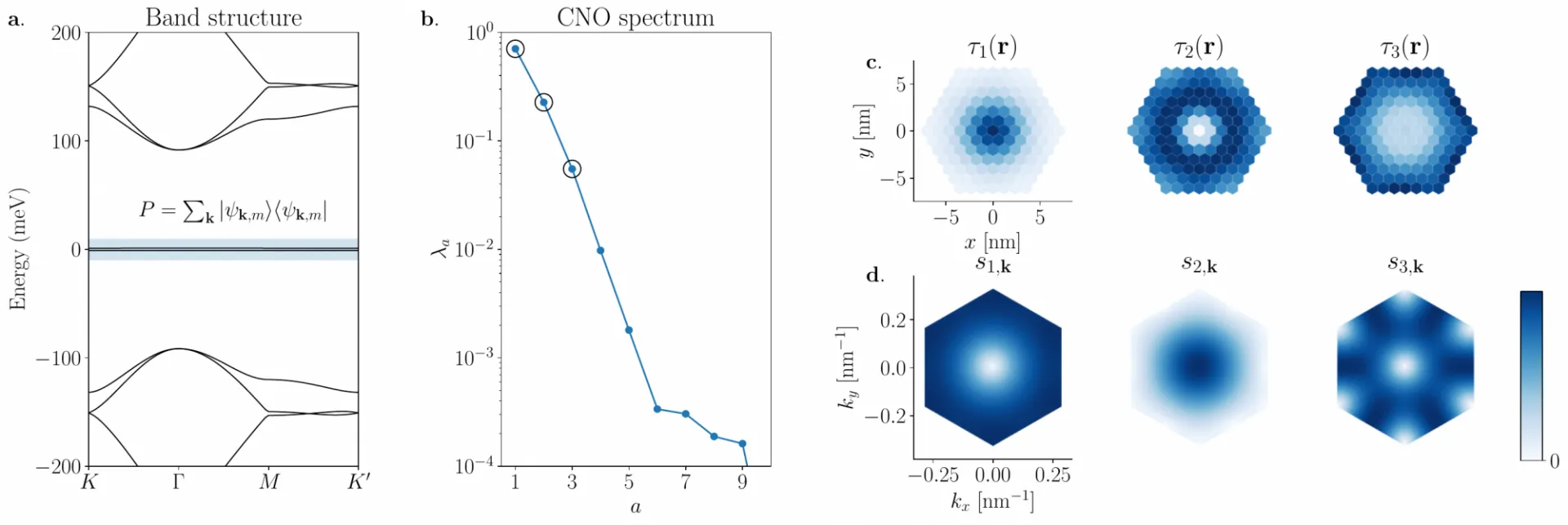
Nish, Harshitra, and Dani use Cell Natural Orbitals to identify which local interaction channels matter most in topological bands. In chiral magic-angle graphene, the dominant orbital is centred at an AA region and carries the strongest interactions. Weaker channels can then be treated at a different level of approximation while preserving the wavefunction overlaps that encode band geometry.
A candidate fractional topological insulator
Candidate for a Fractional Topological Insulator in Twisted MoTe₂
Physical Review X 16, 031009 (2026).
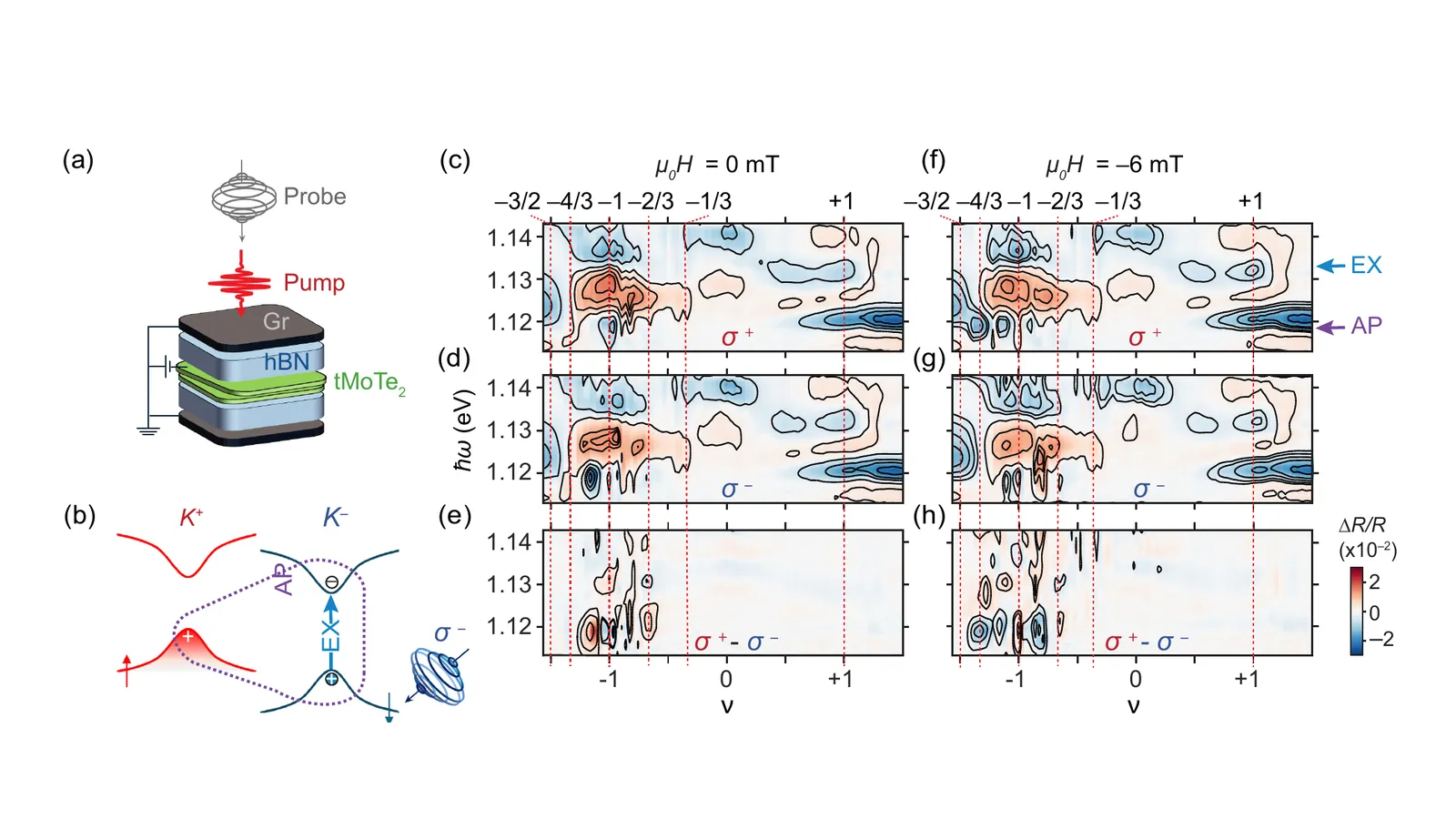
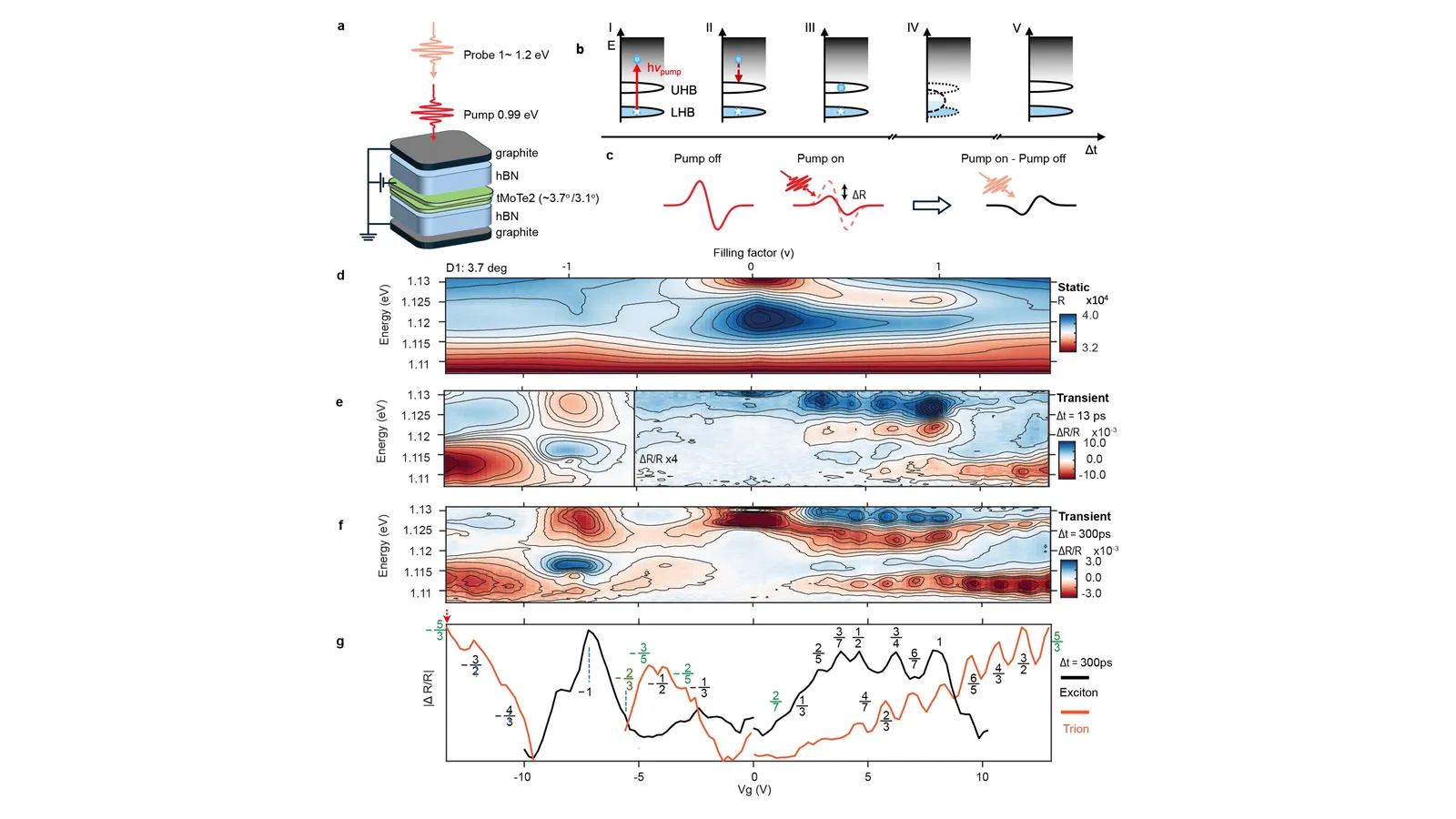
With the X. Y. Zhu group and collaborators, we investigate a fractional-filling state in twisted MoTe₂ with no net magnetization and an unusually sensitive response to a small magnetic field. Pump-probe circular dichroism and interacting continuum calculations support a candidate fractional topological insulator built from opposite-chirality fractional states in the two valleys. Establishing quantized helical edge transport remains an experimental goal.
Hidden states and dynamics of fractional fillings in twisted MoTe₂ bilayers
Nature 641, 1149–1155 (2025).
A light pulse can reveal correlated states that static probes miss. With the X. Y. Zhu group and collaborators, we use transient optical spectroscopy to resolve nearly twenty additional fractional-filling states in twisted MoTe₂. Their melting and recovery distinguish fast electronic dynamics from slower phonon-driven processes.
Topologically protected flatness in chiral moiré heterostructures
Physical Review X 15, 021056 (2025).
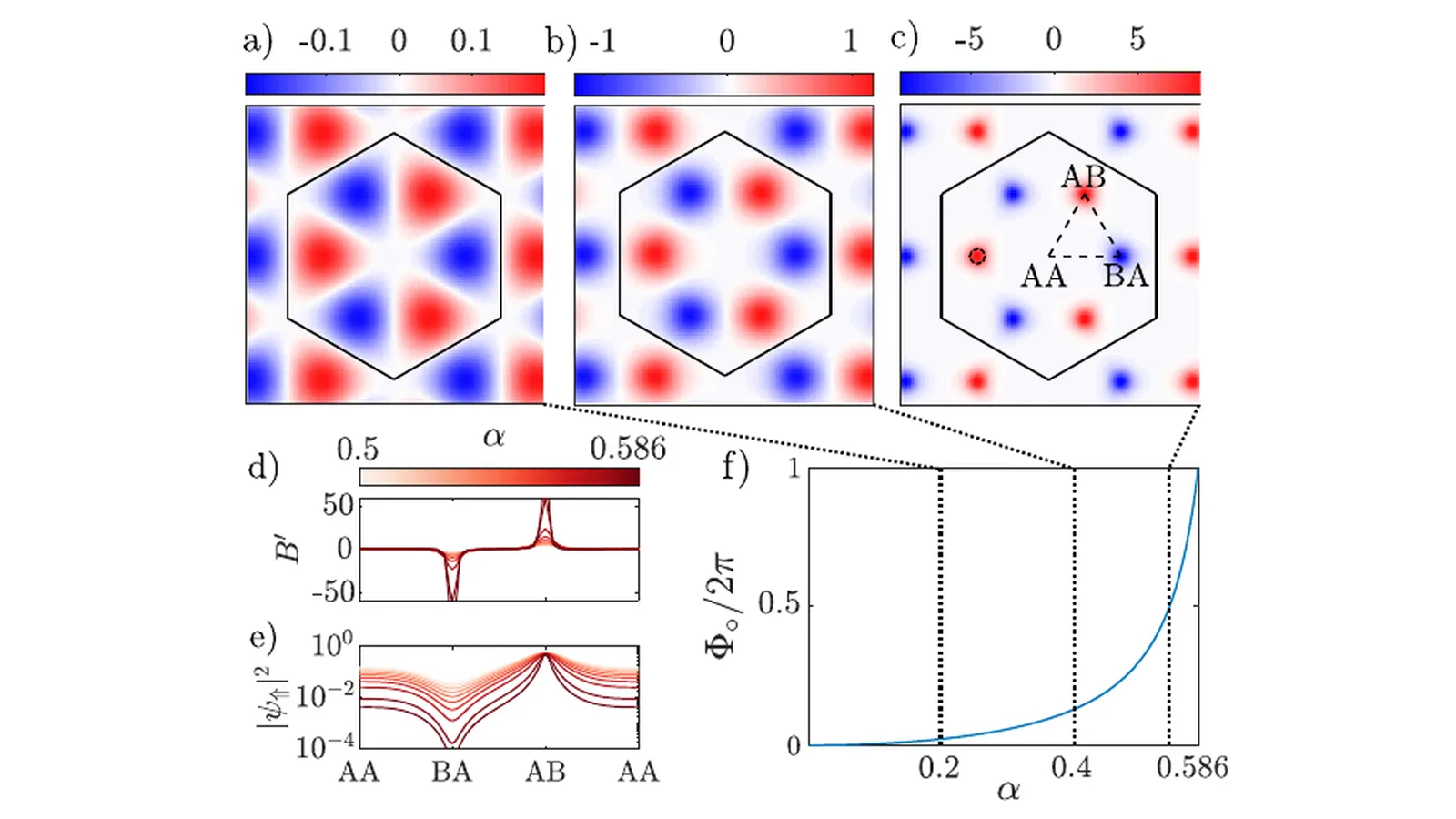
The first magic angle is much less sensitive to certain imperfections than higher magic angles. With Valentin Crépel and Nicolas Regnault, we trace this difference to an effective magnetic field and a topological index theorem in the chiral limit. The theory identifies which scattering processes broaden the bands and which are suppressed by their wavefunctions.
Twist-angle evolution of the intervalley-coherent antiferromagnet in twisted WSe₂
Physical Review B 112, 085111 (2025).
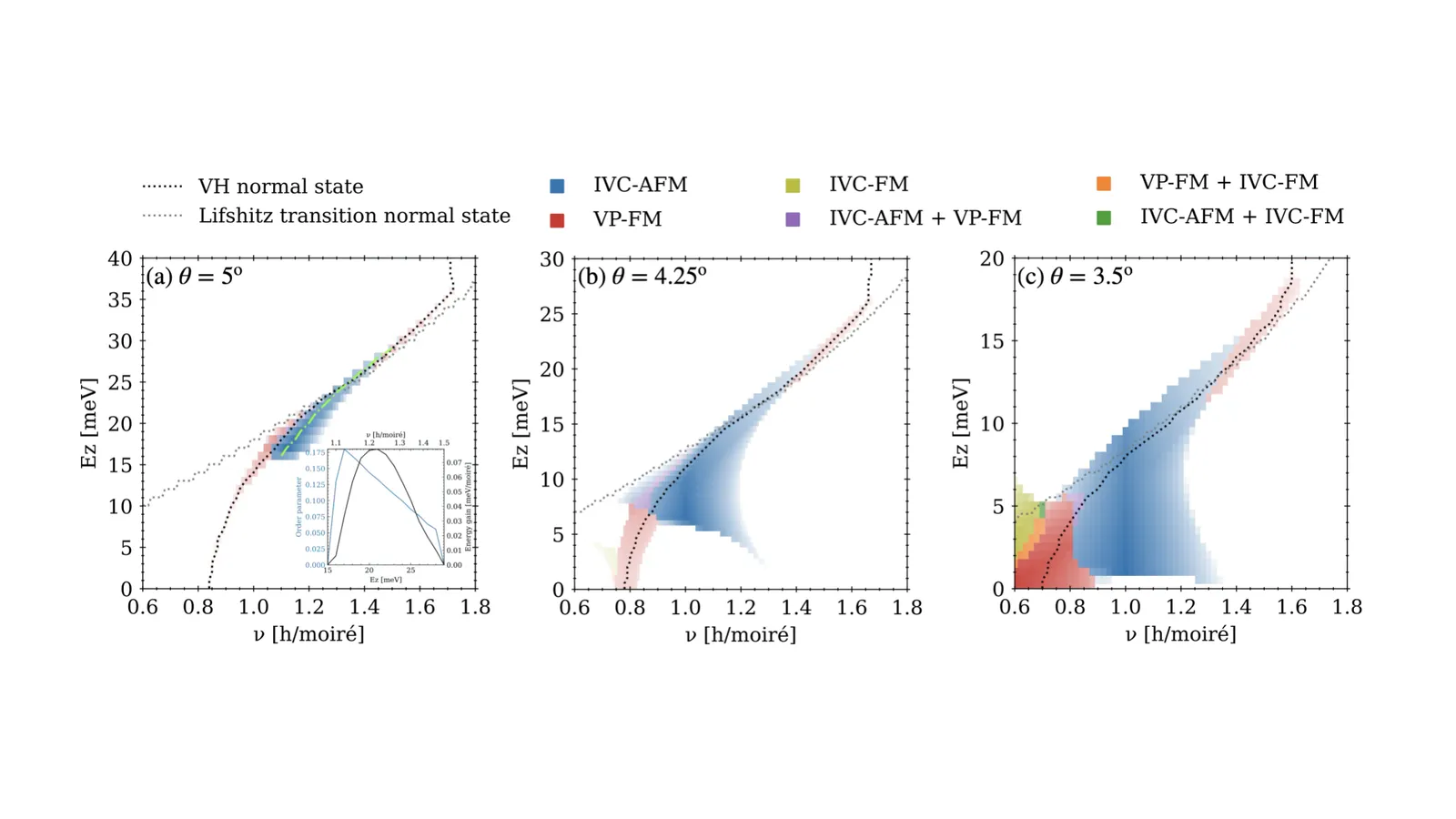
Daniel, Valentin Crépel, Raquel, and Andrew Millis find an intervalley-coherent antiferromagnet in a three-orbital model of twisted WSe₂. Fermi-surface nesting favours the instability, while commensurability pins the strongest order near half filling as interactions increase or twist angle decreases. Coupling between magnetic order and layer polarization connects the phase diagram to electrical control and transport signatures.
Geometric Stiffness in Interlayer Exciton Condensates
Physical Review Letters 132, 236001 (2024).
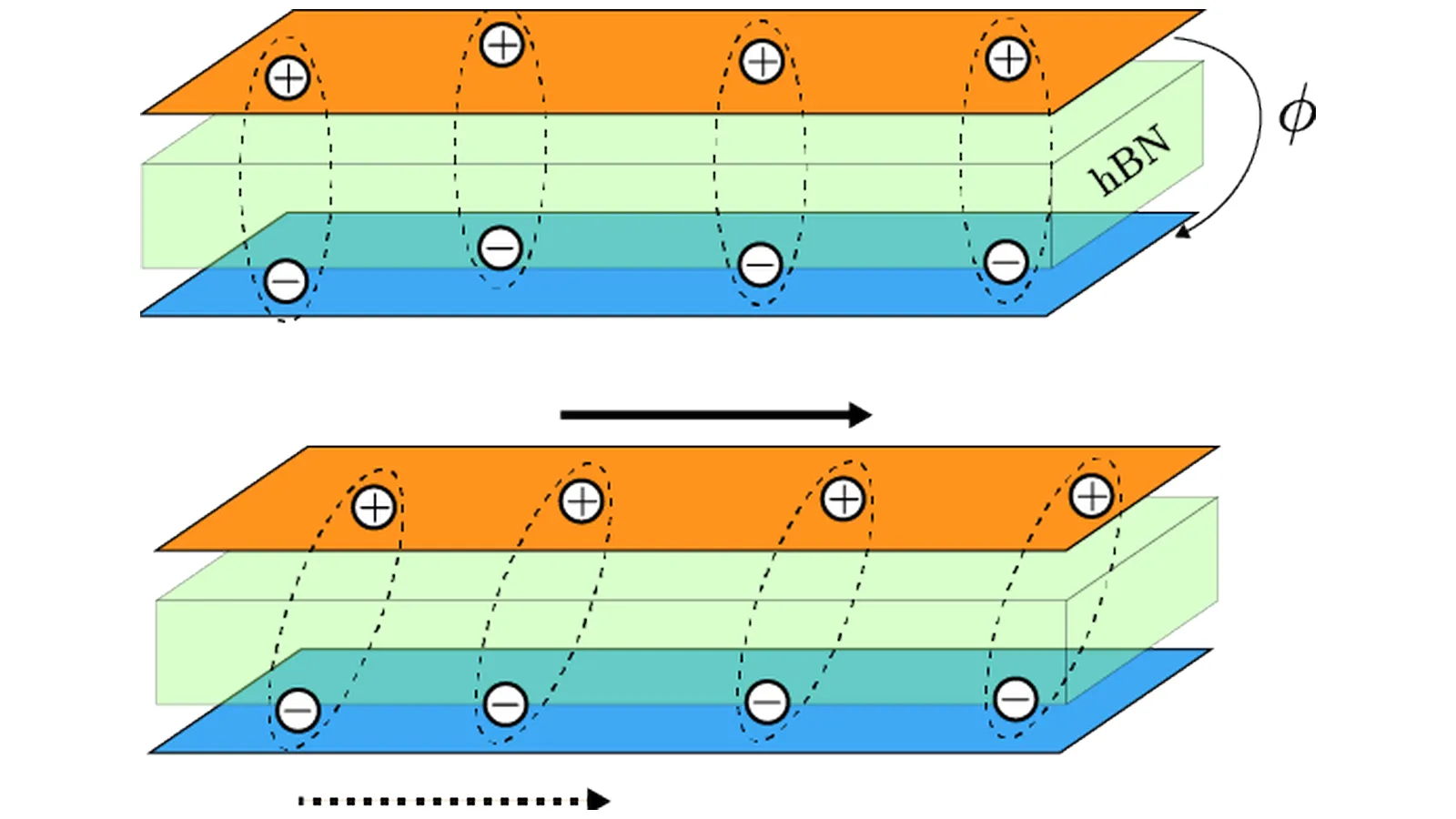
An electron and a hole in different layers can form an exciton condensate whose counterflow resists a phase twist. Nish, Daniele Guerci, and Raquel show that the underlying Bloch wavefunctions add a geometric contribution to this stiffness. In transition-metal dichalcogenide bilayers, that contribution can raise the temperature scale for phase coherence.