Transport and collective behavior of quantum devices
An electric field moves charge between atoms, across a sample, and through collective modes. We connect these motions to the geometry of electronic wavefunctions and identify measurements that distinguish them. Optical spectral weight, capacitance, kinetic inductance, and local Hall fields let us test microscopic theory in working devices.
The same Fermi surface can carry different currents
Long and short time linear response of metals: a geometric approach
arXiv (2026).
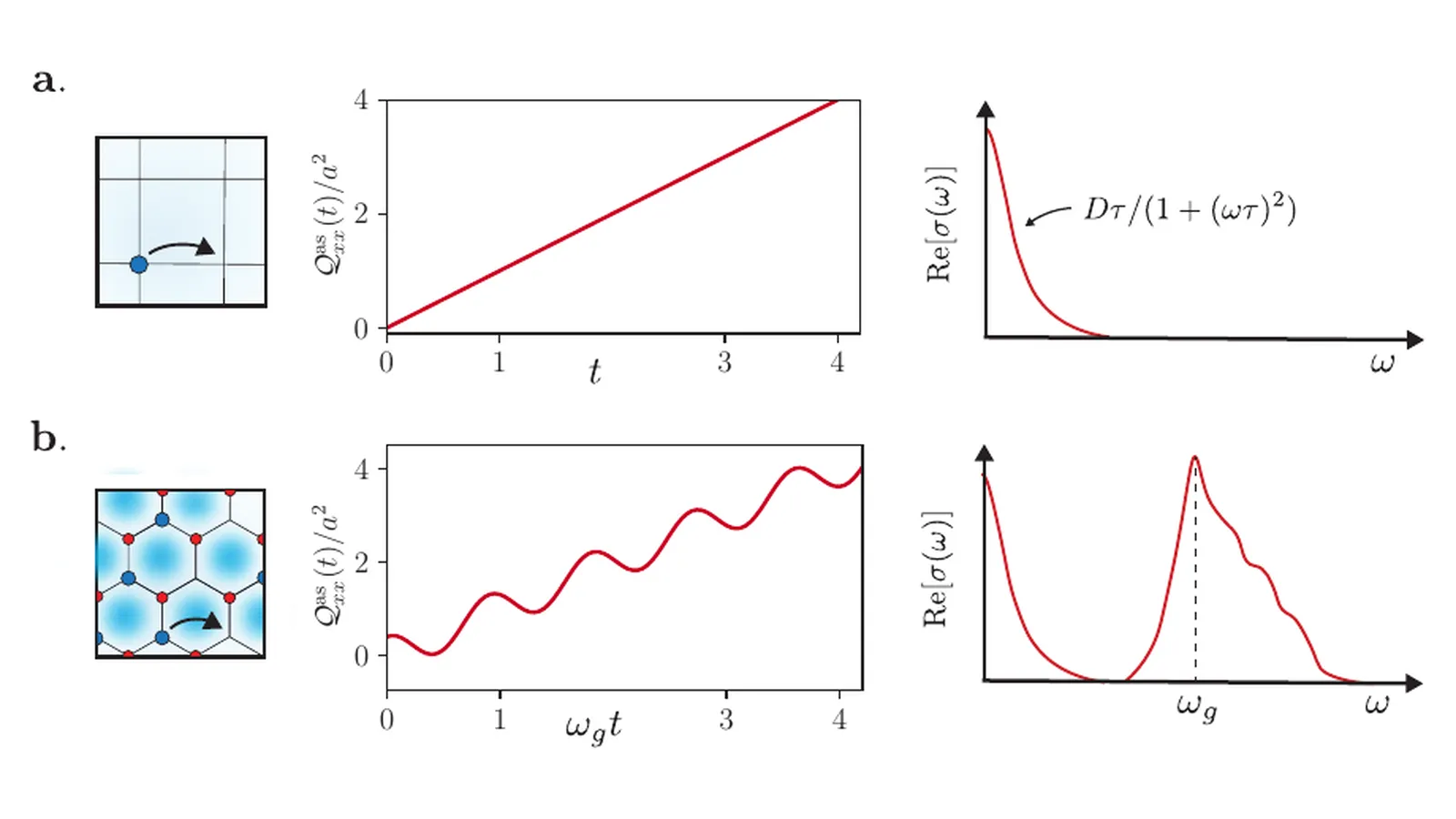
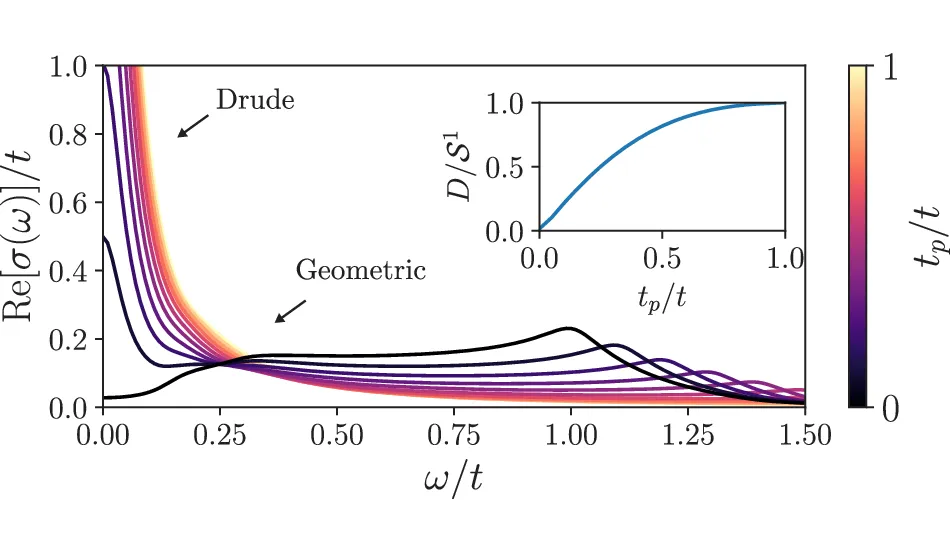
Two fillings of a kagome band can have identical Fermi surfaces yet respond differently to an electric field. Nish and Raquel trace the difference to their wavefunctions. Extending quantum geometry to metals, we show how the ratio of Drude to total optical spectral weight distinguishes itinerant charge from motion bound to the lattice.
Electronic motion within a unit cell
Quantum Geometry and the Hidden Scales in Materials
Nature Reviews Physics 8, 226–239 (2026).
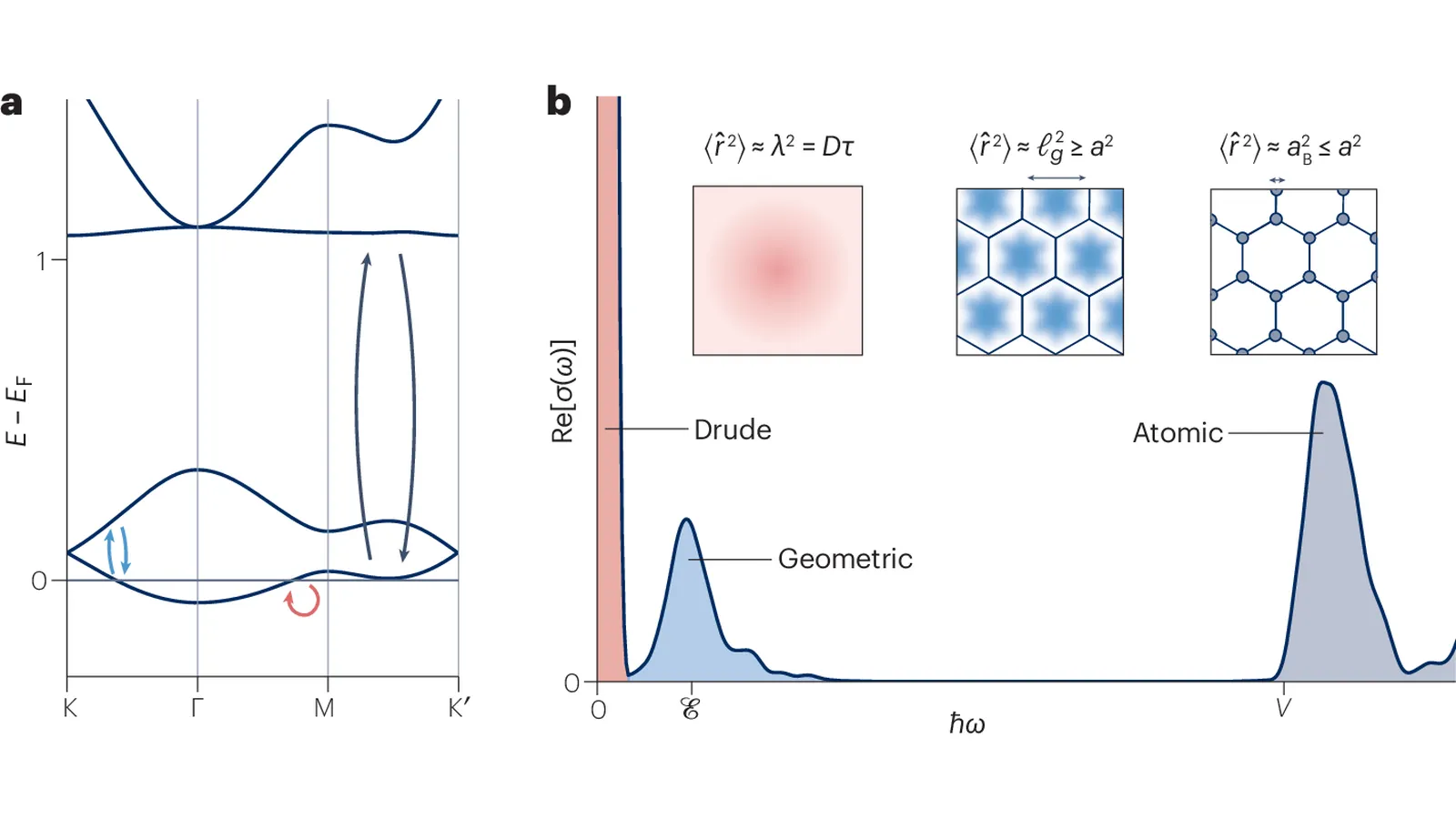
Interband dipole fluctuations introduce length and time scales beyond those inferred from band dispersion. With Philip Moll and Tobias Holder, Nish and Raquel explain how these scales enter optical absorption, dielectric response, and collective order. Their relative sizes indicate when quantum geometry must be retained in a material’s low-energy description.
Interactions reshape graphene plasmons
Plasmon dynamics in graphene
arXiv (2026).
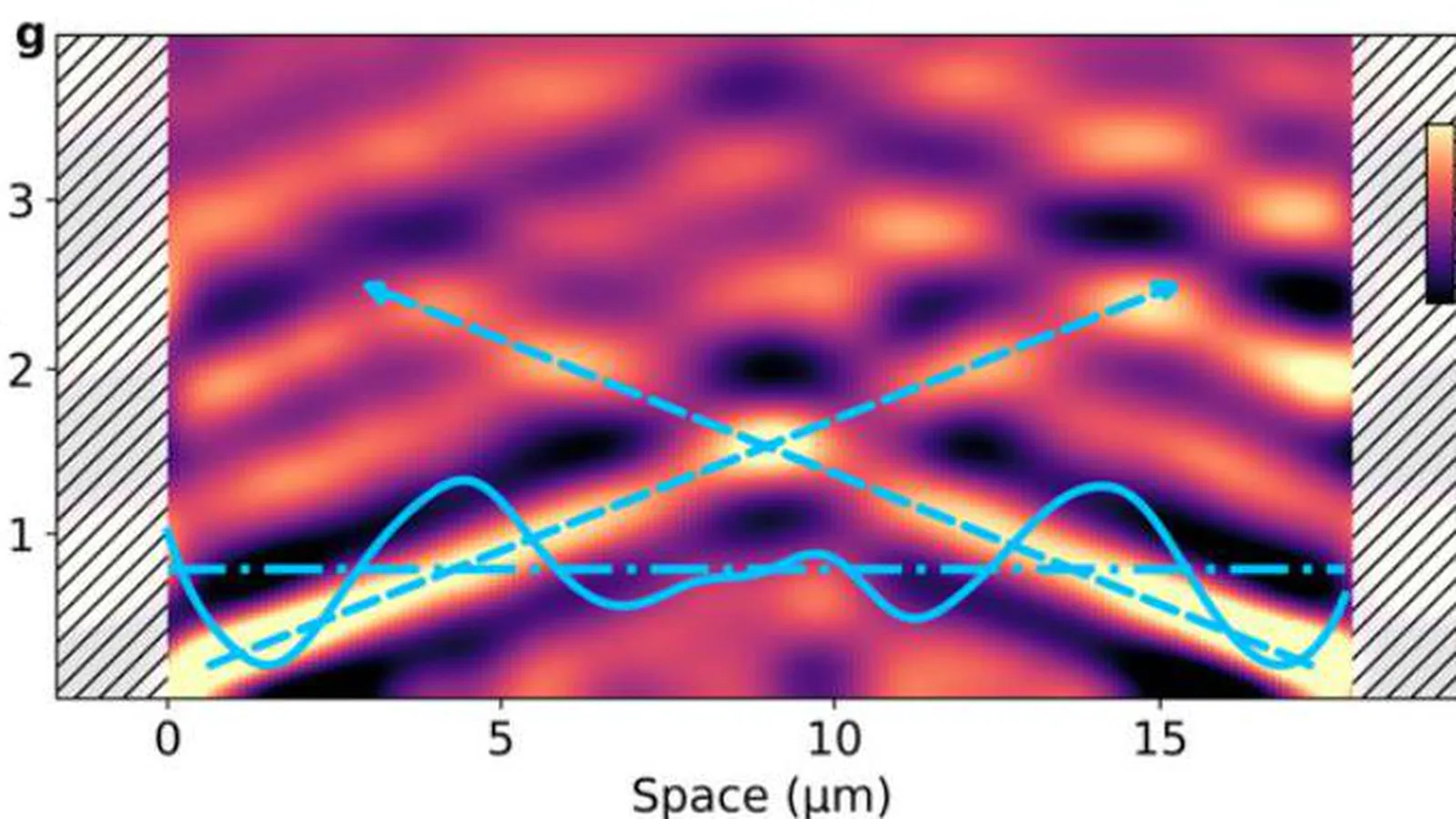
With the Basov laboratory and collaborators, we follow collective charge waves through mono- and bilayer graphene using terahertz spacetime metrology. Their measured Drude weight exceeds the non-interacting prediction, especially at low carrier density. We relate this enhancement to the interplay of electronic interactions and the pseudospin structure of Dirac wavefunctions.
Kinetic inductance tests the superconducting gap
Observing unconventional superconductivity via kinetic inductance in Weyl semimetal MoTe₂
arXiv (2025).
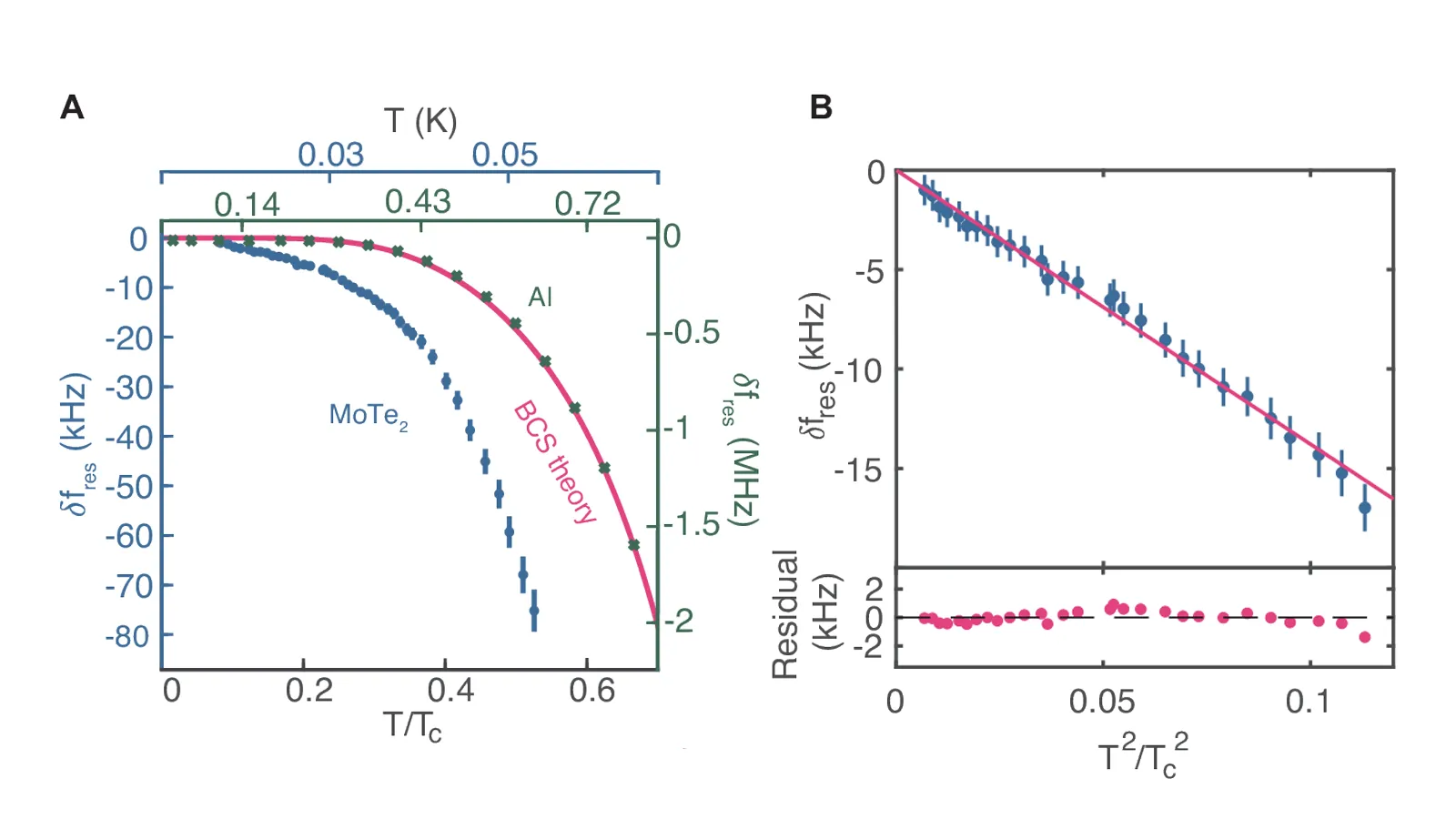
With Kin Chung Fong’s group and collaborators, we use a microwave resonator to measure the kinetic inductance of MoTe₂ and infer its magnetic penetration depth. Its power-law temperature dependence and nonlinear current response provide complementary evidence for nodes in the superconducting gap.
A common origin for insulating response
Instantaneous Response and Quantum Geometry of Insulators
Proceedings of the National Academy of Sciences 122, e2405837122 (2025).
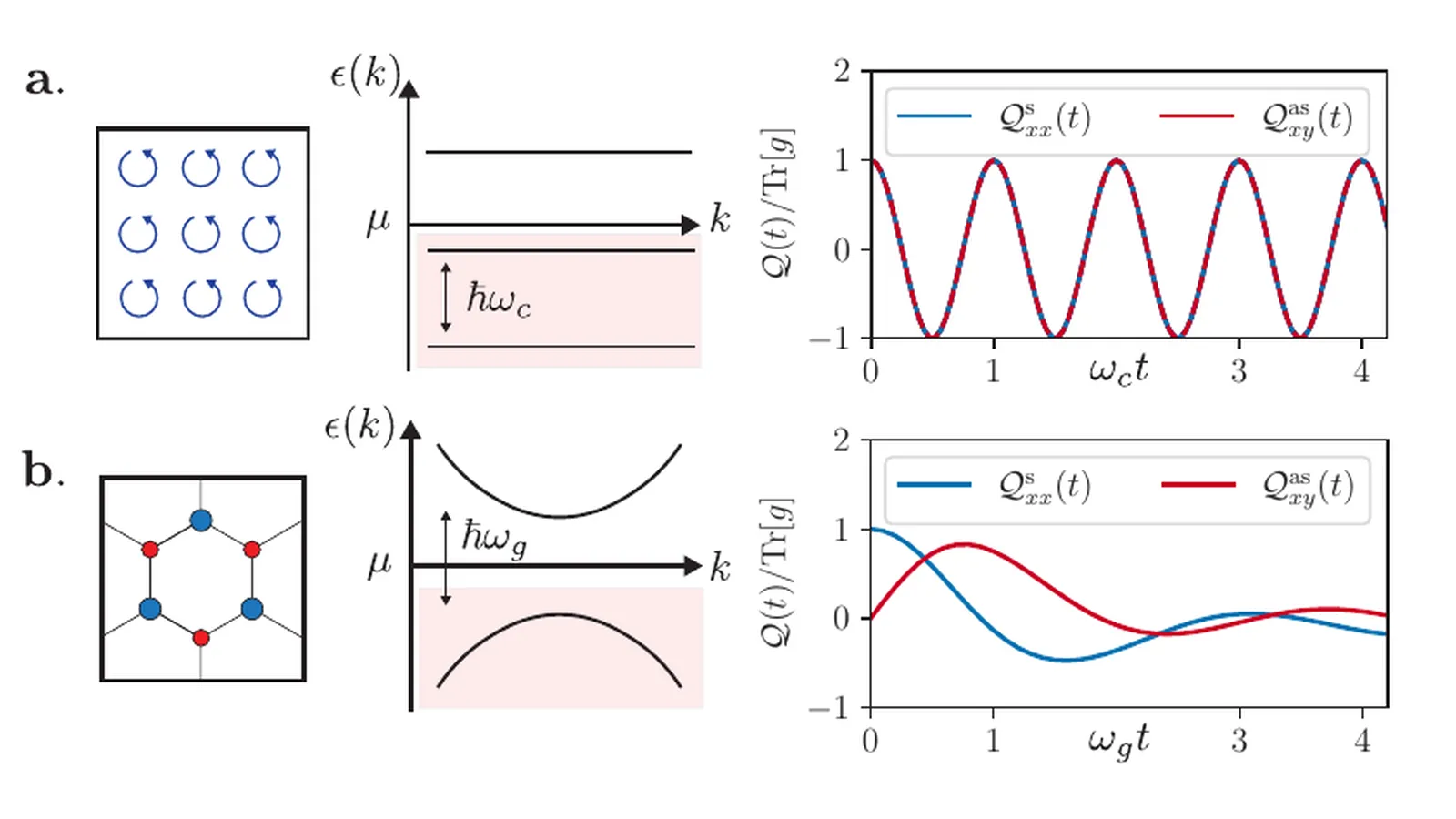
Even an insulator carries an ac current as its bound electrons polarize. Nish and Raquel describe their quantum dipole motion with a time-dependent geometric tensor. The resulting conductivity sum rules connect optical mass, orbital magnetic moment, and dielectric response to the same underlying wavefunctions.
Quantum geometry across material platforms
Quantum geometry in quantum materials
npj Quantum Materials 10, 101 (2025).
With Jiabin Yu, Andrei Bernevig, Enrico Rossi, Päivi Törmä, and Bohm-Jung Yang, we review how quantum geometry enters optical response, Landau levels, fractional Chern phases, superfluid and spin stiffness, excitons, and electron–phonon coupling. The common starting point is how Bloch wavefunctions change across a band.
Measure geometry through relaxation
Framework to Measure Quantum Metric from Step Response
Physical Review Letters 134, 106403 (2025).
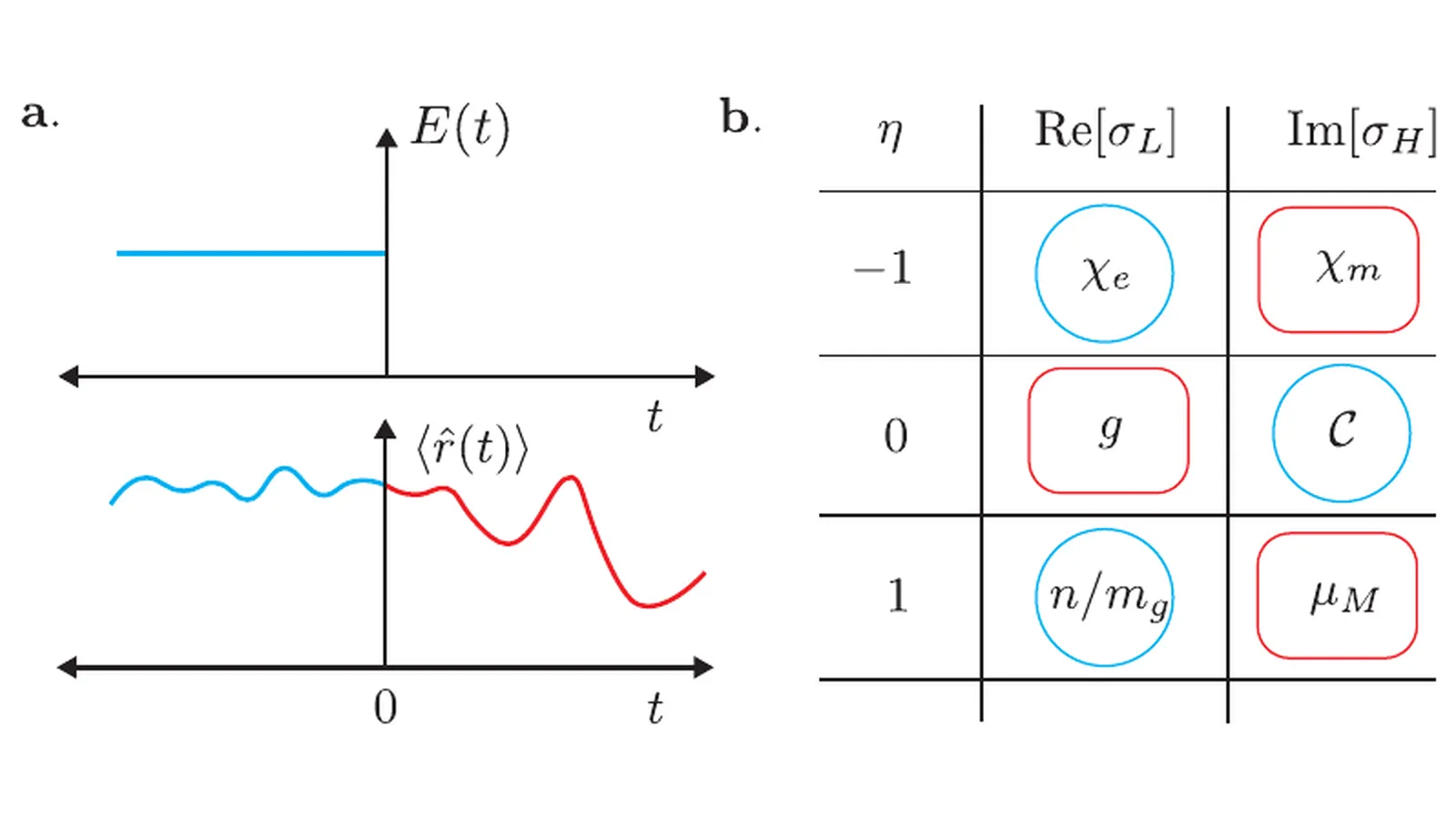
Conductivity weights wavefunction geometry by excitation energies. Nish and Raquel propose a way to remove that weighting: release an electrically constrained equilibrium state and follow its relaxation. The appropriate field protocol implements the optical frequency integral that yields the Brillouin-zone-integrated quantum metric.
Geometric stiffness in an exciton condensate
Geometric Stiffness in Interlayer Exciton Condensates
Physical Review Letters 132, 236001 (2024).
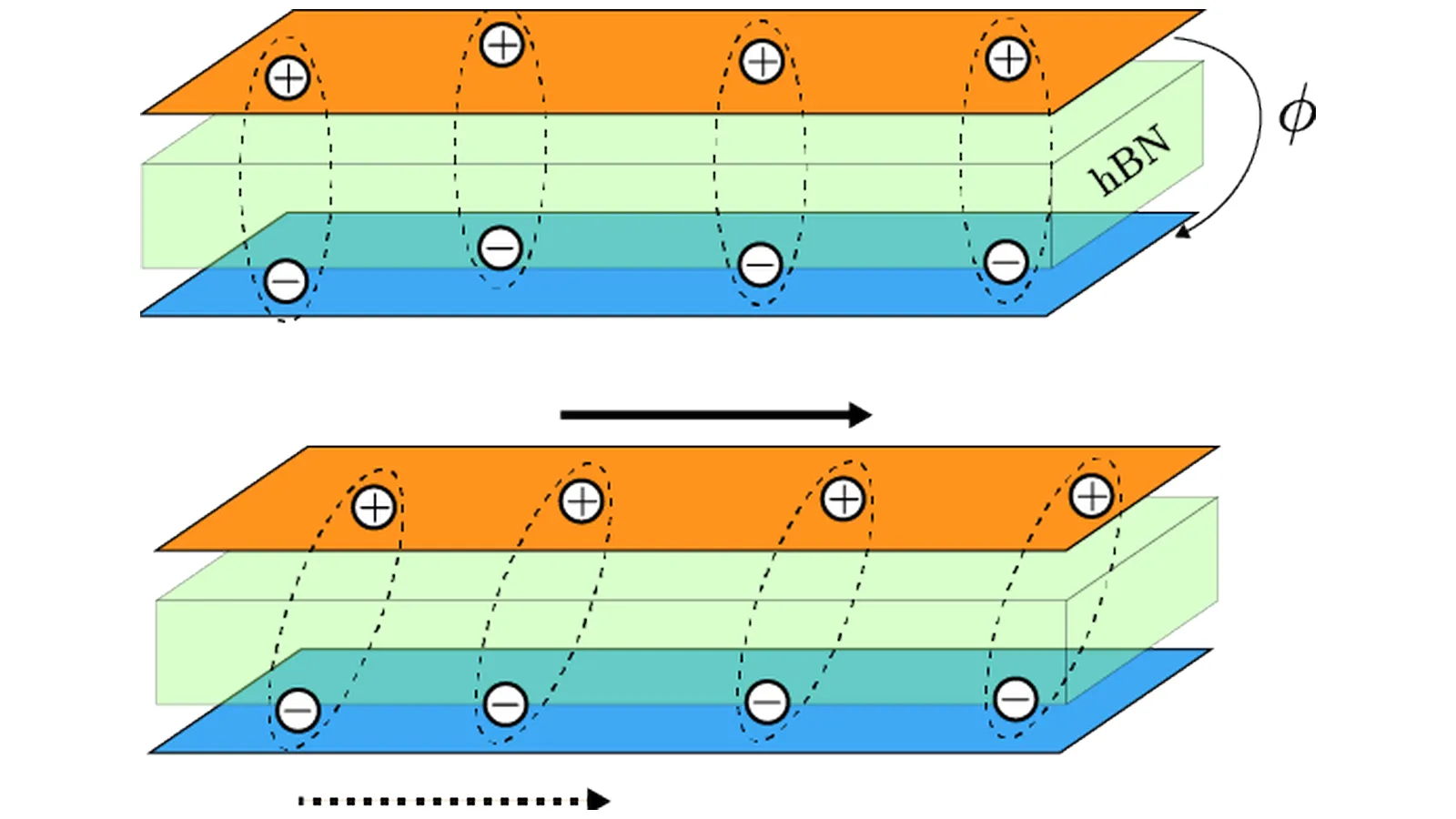
An interlayer exciton condensate supports oppositely directed currents in its two layers. Nish, Daniele Guerci, and Raquel find that the quantum metric contributes to the stiffness of this counterflow, strengthening phase coherence. A continuum model of transition-metal dichalcogenide bilayers estimates the size of the effect.
Capacitance probes virtual interband motion
The quantum geometric origin of capacitance in insulators
Nature Communications 15, 4621 (2024).
An insulating crystal polarizes through virtual transitions between occupied and empty bands. Ilia, Tobias Holder, and Raquel show that the resulting intrinsic capacitance is controlled by quantum-metric matrix elements weighted by excitation gaps. This connects the electronic dielectric response to wavefunction geometry in systems ranging from quantum Hall states to diamond.
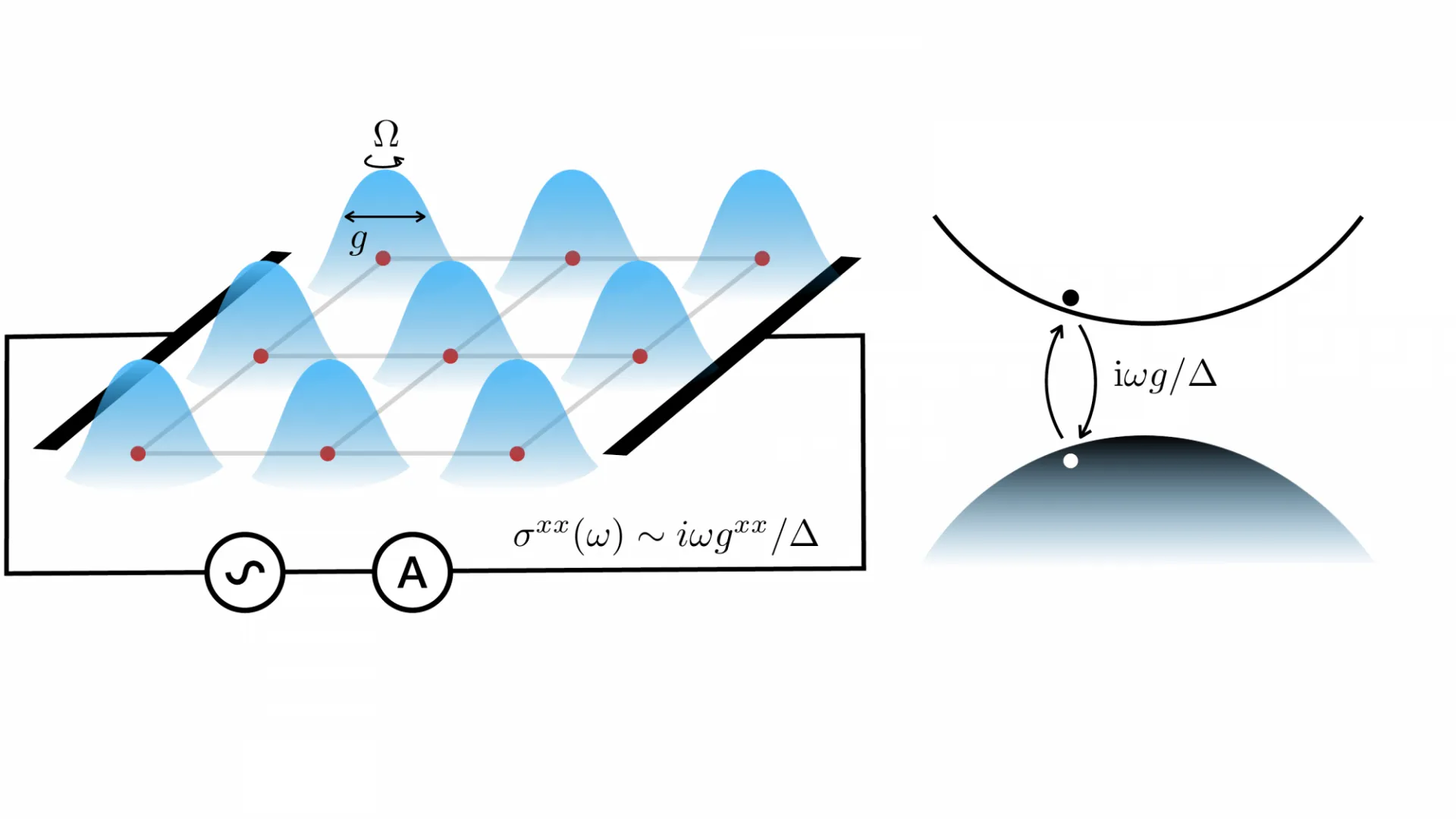
Image the crossover to viscous flow
Visualizing Poiseuille flow of hydrodynamic electrons
Nature 576, 75–79 (2019).
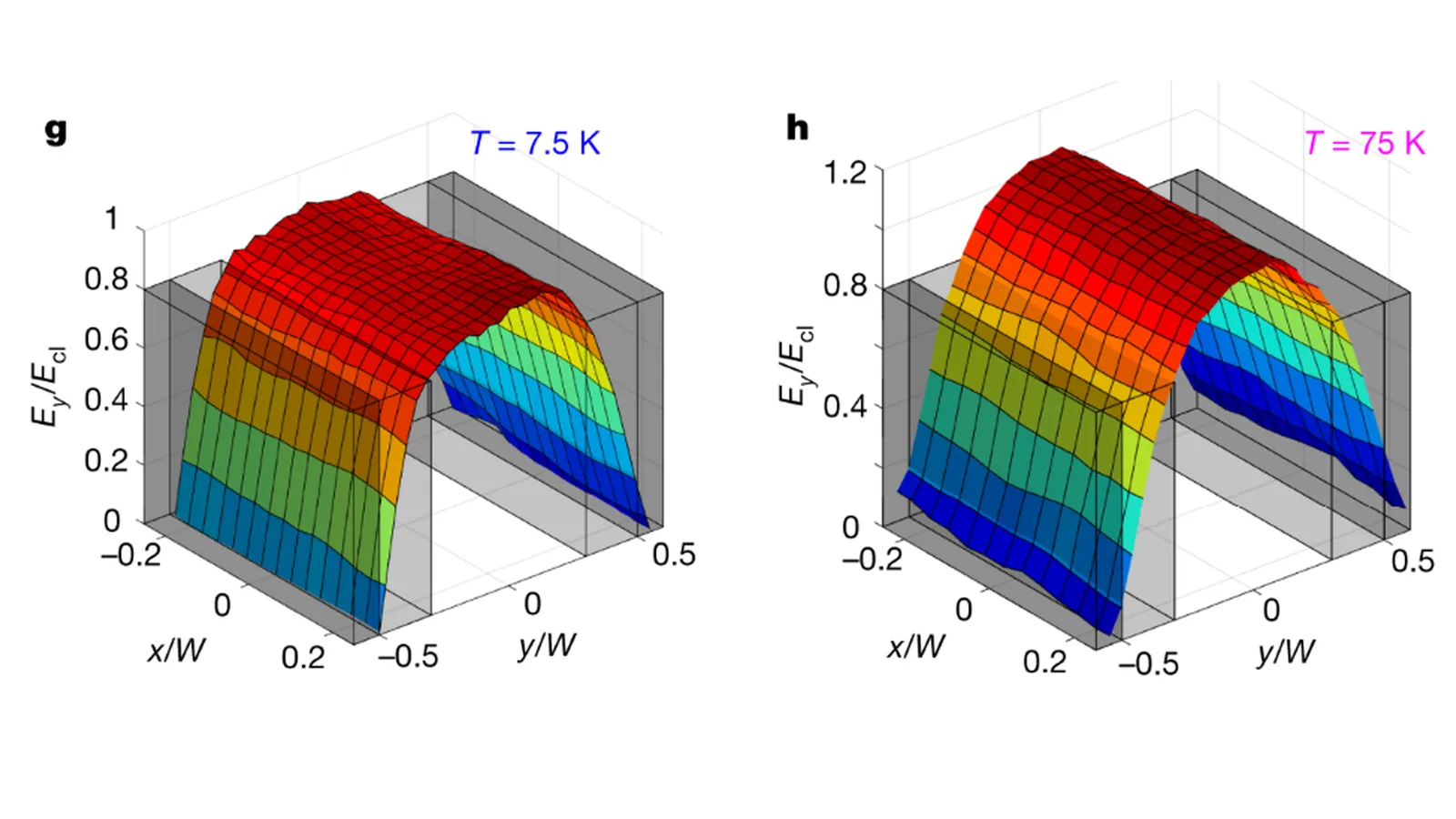
With Shahal Ilani’s group and collaborators, we image the Hall field across a graphene channel as electron flow changes from ballistic to hydrodynamic. A scanning nanotube electrometer resolves the developing parabolic profile, while Boltzmann calculations connect its curvature to collisions and the formation of Poiseuille flow.
Ballistic and hydrodynamic magnetotransport in narrow channels
Physical Review B 100, 245305 (2019).
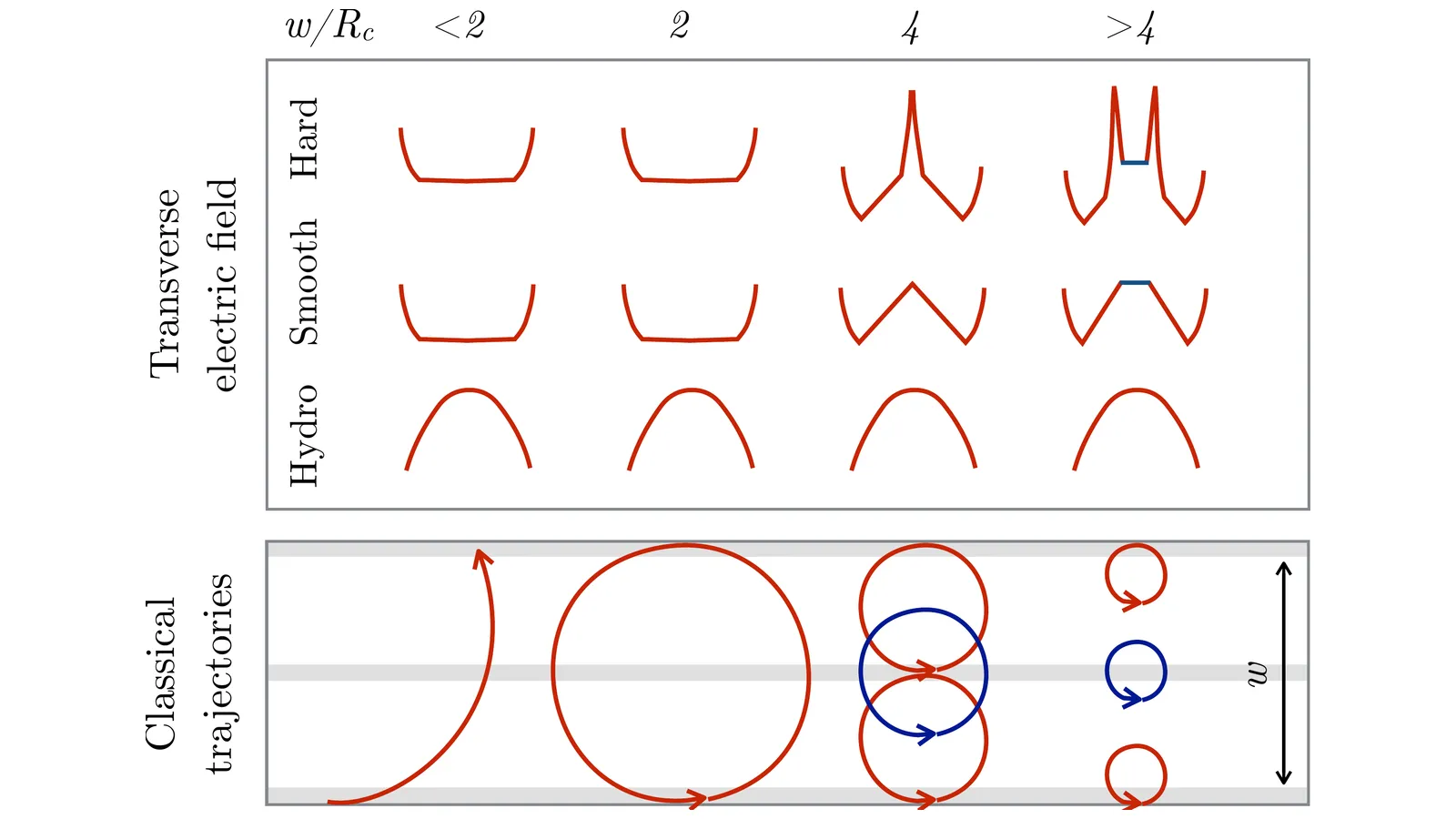
With Tobias Holder and collaborators, we use kinetic theory to determine how a weak magnetic field distinguishes ballistic and hydrodynamic motion. The transverse electric-field curvature changes sign between regimes, and additional peaks reveal nonlocal correlations. These spatial signatures identify where a purely hydrodynamic description ceases to apply.